Standards
- Company
- And You Create
- Team
- 4 people. Product, Dev, Design, Ops
The product
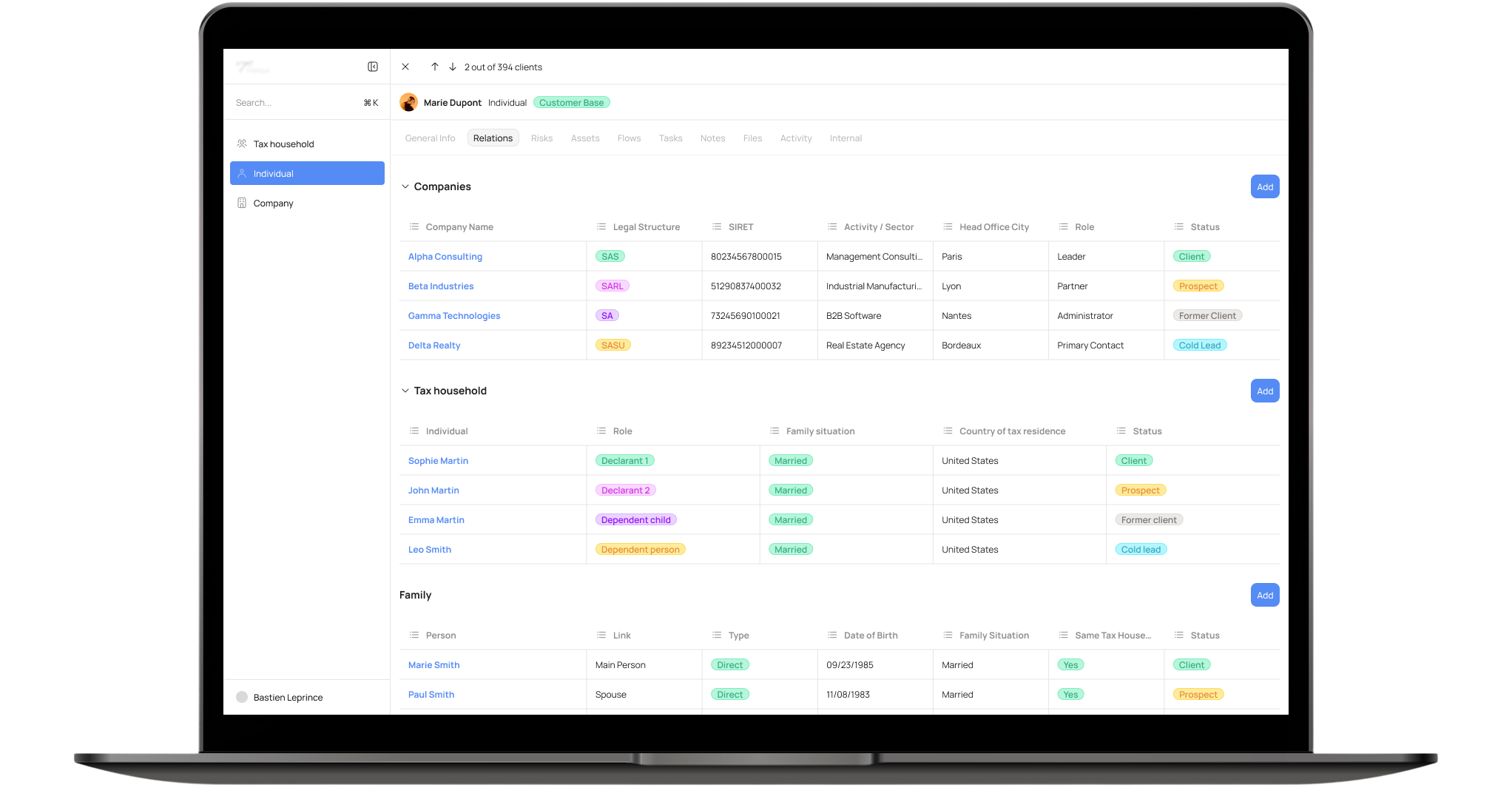
Standards is an AI native operating system for regulated finance teams. Firms can model their own objects and workflows, while compliance, auditability, and traceability sit inside the data model from the first sketch.
It pulls together three layers that usually live in separate tools: Customer (people, entities, households, relationships, risk profiles), Product (financial contracts with eligibility rules, pricing limits, subscription flows), and Regulatory (MiFID, IDD and DDA, KYC, AML logic carried in the model). Above that sits a library of AI agents for extraction, profiling, portfolio synthesis, workflow, and monitoring. Agents suggest. Humans decide. The system keeps a record.
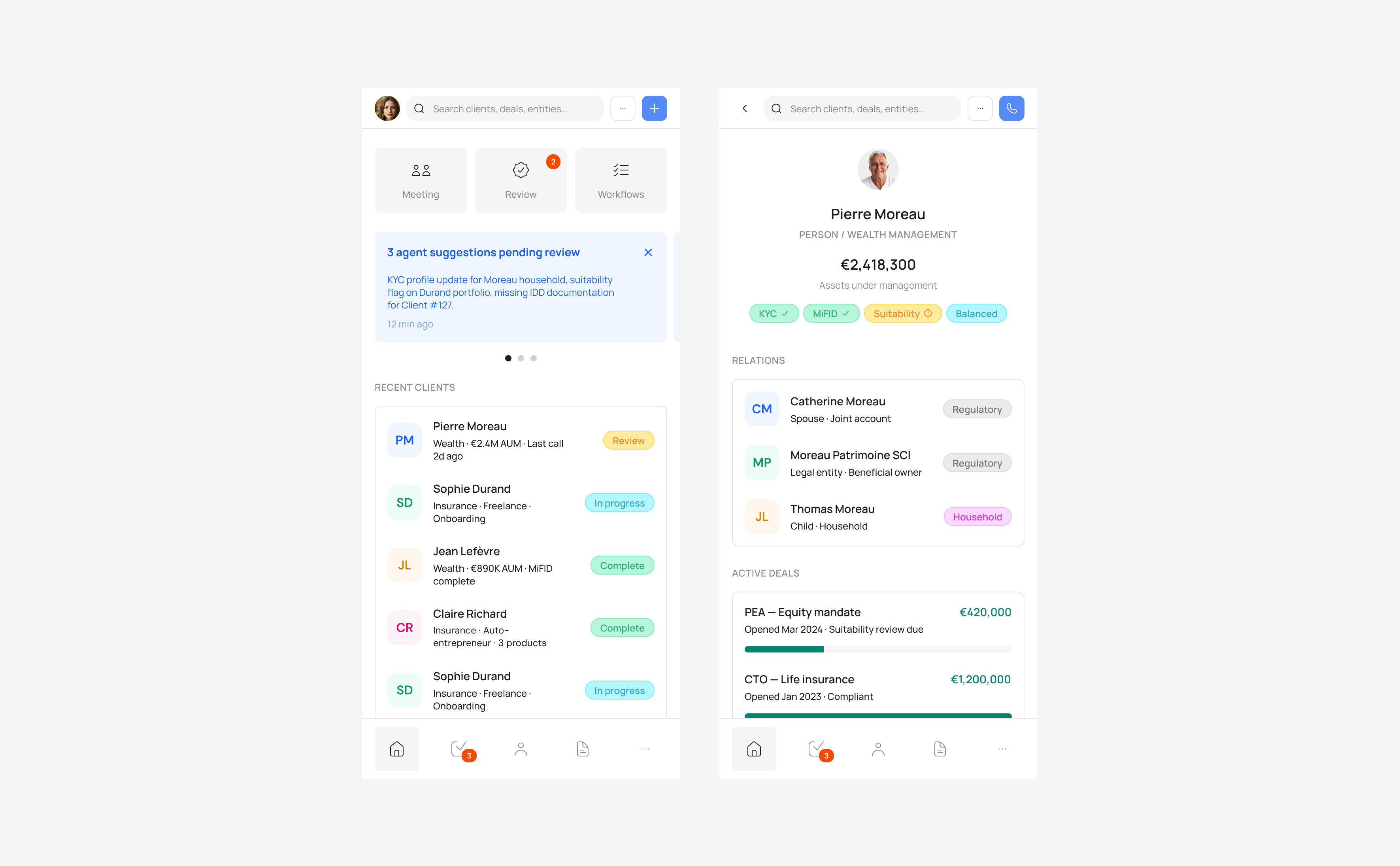
It ships across devices. Advisors in regulated finance move between deep work and quick checks in between meetings, so the core workflows needed to stay consistent.
The design challenge
Two tensions showed up everywhere. First, how do you keep a product flexible and still accountable? In a regulated setting the system cannot feel clever in a black box. Every decision, suggestion, and automated step has to be explainable to an auditor.
Second, how do you ship a complex regulated product that stays usable in different contexts? Advisors pull up client records in meetings, review AI output on the move, and log calls between sessions. The bar was the same depth of information, audit trail, and control without treating one context as a lite version.
Key design decisions
Three choices shaped almost everything else.
01A configurable object model that works on every screen
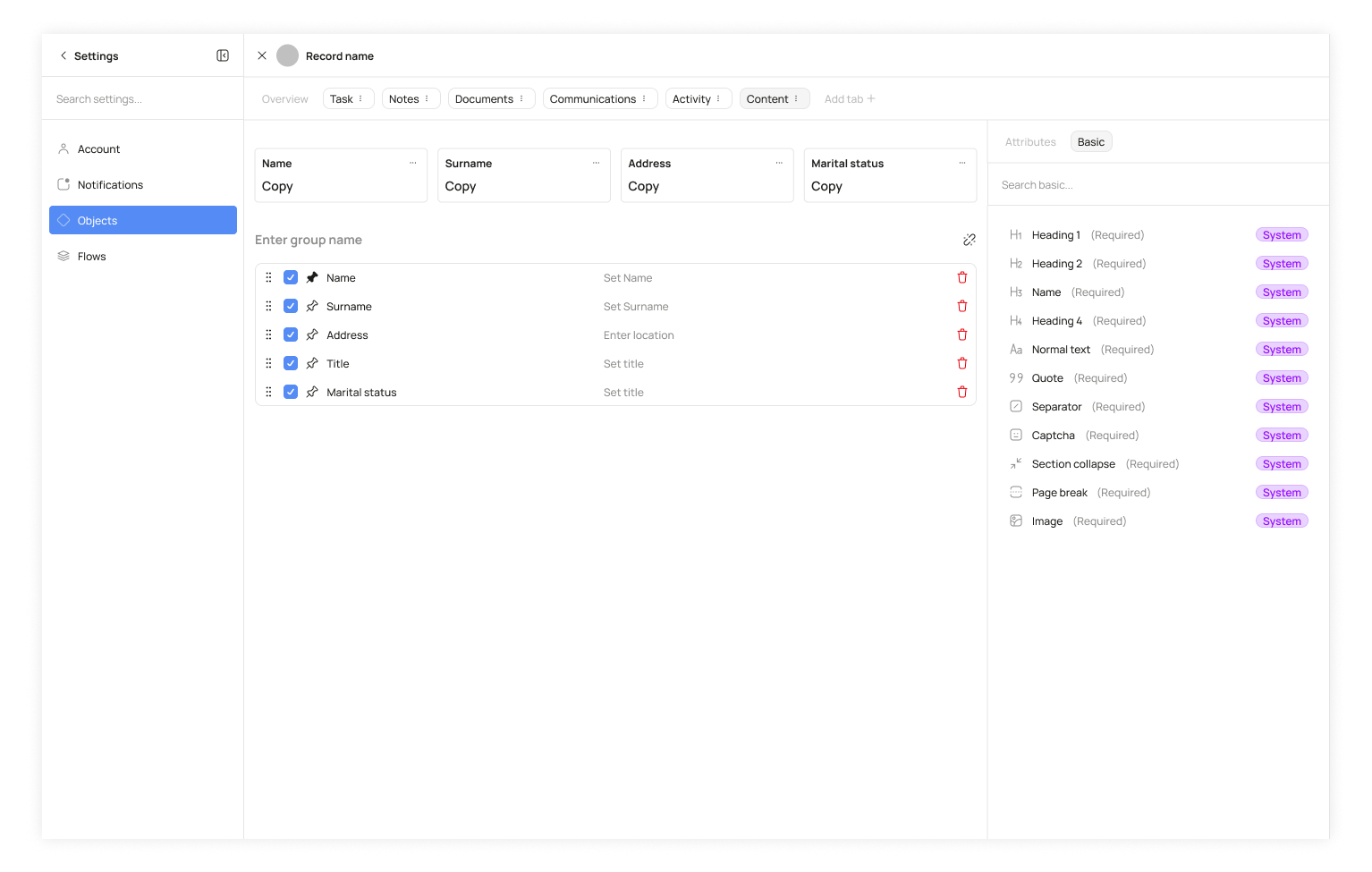
Standards covers different verticals: wealth management, insurance distribution, even wine commerce. We could not hardcode every entity, but we could not leave the model wide open either. Regulated objects need a spine.
We landed on a two tier object system. Four native objects (Person, Legal Entity, Deal, User) stay fixed. Everything else is a configurable business object with properties, relations, and regulatory notes. Objects and relations can carry legal weight. Calling someone a spouse is not decorative; it is a relation type that can trigger specific rules.
The model still had to be navigable when screen space and attention are limited. An advisor opening a client during a meeting needs to move through household members, linked entities, and open deals without getting lost. With more space you can see the full relational graph; in tighter contexts it becomes a prioritized path you can still drill through without losing context.
Workflows also cross contexts. Onboarding might start in a long-form session, pick up a signature in the room, then continue later when a compliance step clears. The state is continuous; only the layout changes.
02AI that shows its work
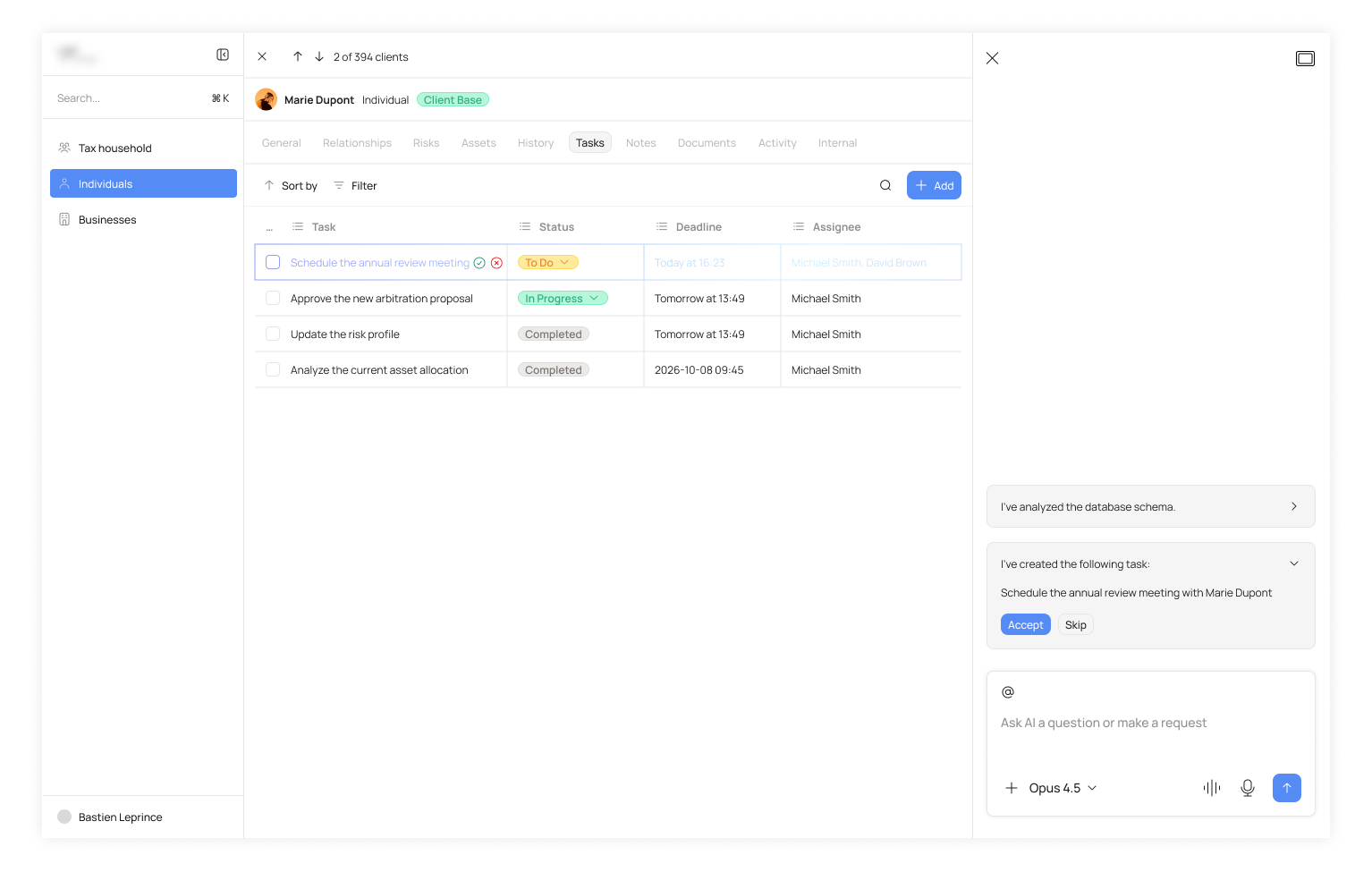
Standards runs many agents: data updates, profiling, compliance checks, workflow steps. In production a wealth advisor needs to know why a portfolio line was flagged or why a given client action was proposed, and they need to repeat that story to a regulator without hand waving.
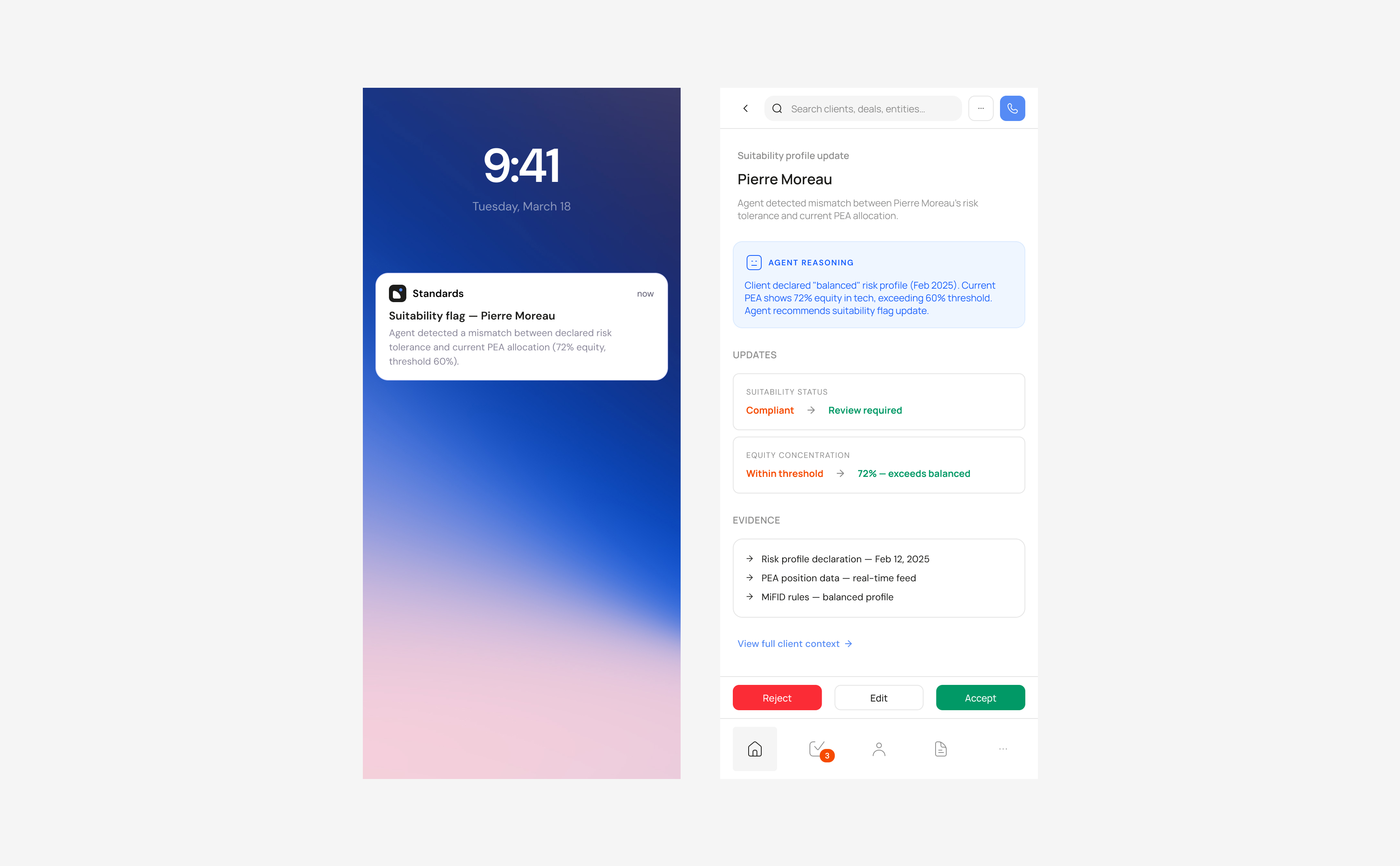
Every agent response follows one pattern: what it thinks, why, what evidence it used, and what it recommends next. Nothing applies in the background. The advisor gets a review screen with accept, edit, or reject, and the system logs the full context.
We designed the flow for real world pacing. Between meetings, someone might get a push that an agent found an inconsistency or drafted a suitability note. They can resolve it quickly, and the screen foregrounds what changed; the rest opens on demand so the interaction stays short without hiding the reasoning.
The audit trail works the same way across devices. On any record you can see what changed, who touched it, when, and whether a human or an agent initiated it. The default view is a quick timeline for a fast read; the full detail stays easy to open when there is room. When we clarified something for audit, it usually got clearer for day to day use as well.
03AI assisted call registration
Advisors spend a lot of time speaking with clients. In a regulated setting those calls need a record: what was said, what was recommended, what the client agreed to. Before Standards that often meant handwritten notes or reconstructing the call from memory. Details dropped, files were thin, and the gap between the conversation and the file was a real risk.
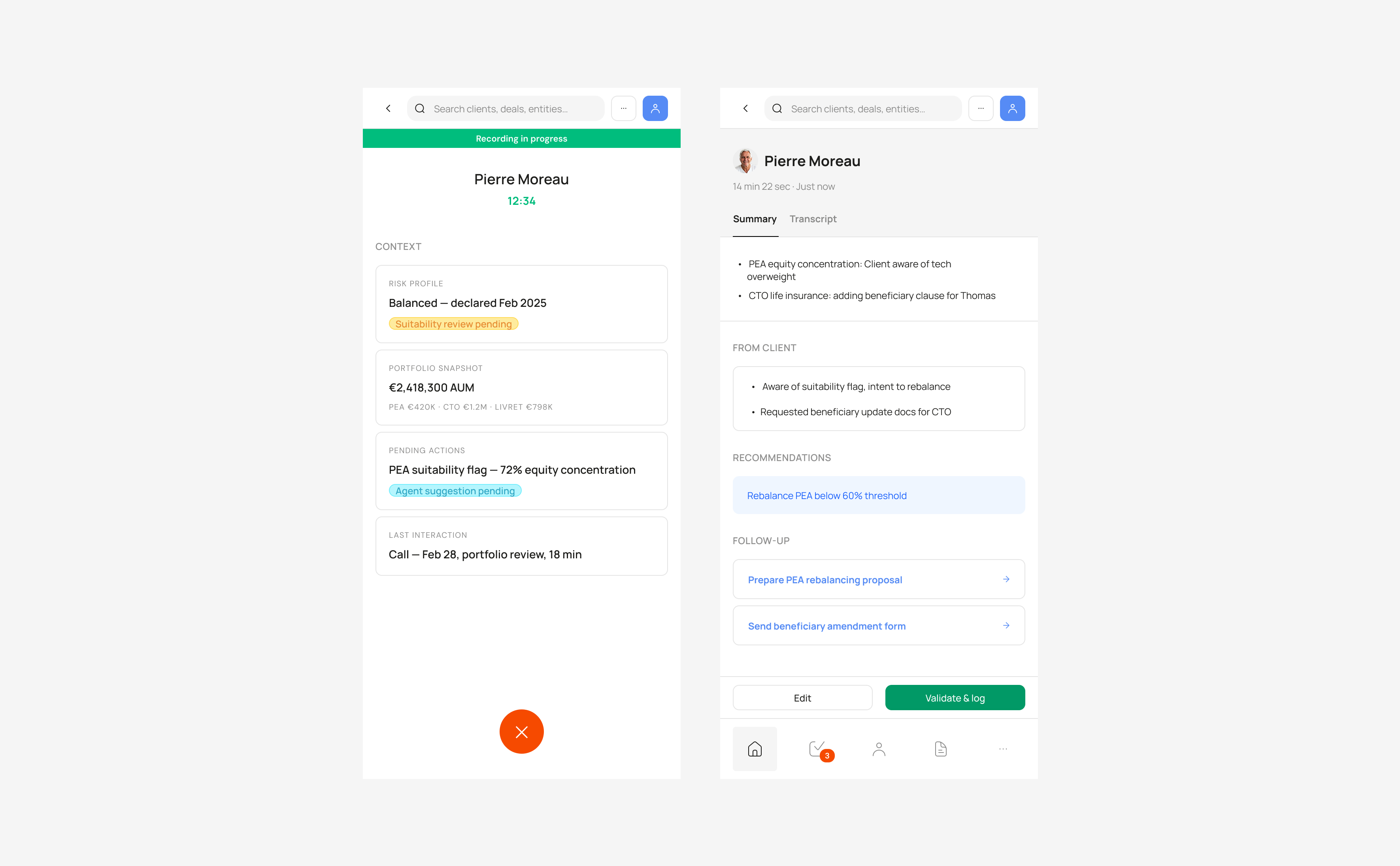
We built a call flow designed for use during a call. The advisor starts a log, and AI works through the audio as it runs. During the call the surface shows the risk profile, recent portfolio moves, open compliance items, and live recommendations. Afterward it produces a structured summary: topics, recommendations, confirmations, and next steps. The advisor signs off before anything lands in the compliance record.
The layout mattered here. It had to be light enough to use while talking, but dense enough for a compliance reviewer later. We kept it to one job: live context during the call, then a short validation step right after.
It turned paperwork people avoided into something the system did most of. Advisors stopped treating post call notes as a chore, and compliance saw fuller files than manual notes usually produced.
In the field
Standards is in use with two clients: a wealth manager and an insurance distribution platform. Different industries, same object model, same workflow engine, same agent library, without forking the codebase by device.
The wealth rollout stressed cross context work: onboarding at a desk, signatures on a tablet in the room, quick checks between visits. The agent review screens needed a pass; the first build showed too much at once when attention was limited. Showing only the delta first, with the rest behind an expand control, helped across the board.
The insurance rollout tested how far configuration could stretch. When a new insurer is added, the team configures it once and the workflows follow. Push reminders for missing files and open compliance tasks kept people current without forcing a return to long desktop sessions.
What I took away
Simplifying a view for constrained moments often made the full version clearer. It forced us to name what actually mattered in each step.
Products that lean on AI still need room for doubt and review. The hard question was rarely how to make the model busier; it was how to make every automated step visible, contestable, and reversible no matter which device someone is holding. That is a design question before it is an engineering one.